
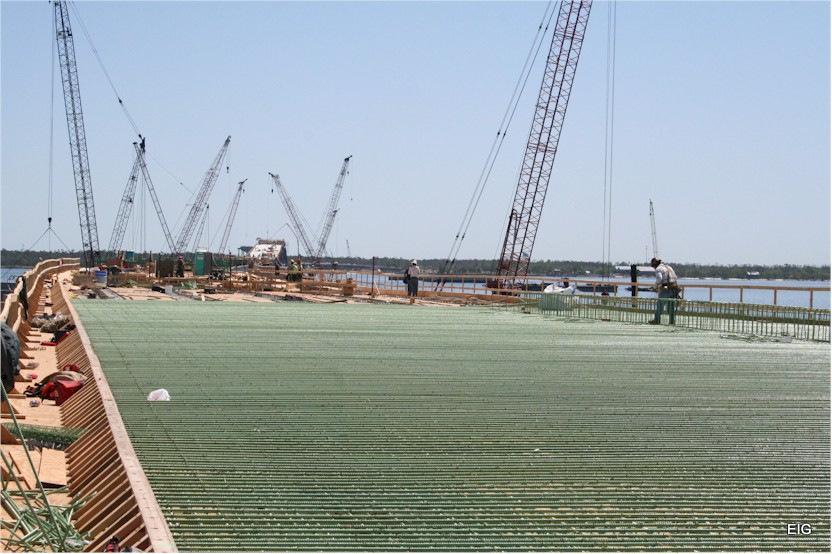
It’s not sexy, but it is improving!
Let’s acknowledge the obvious: rebar isn’t exactly the sexiest material on an architect’s specification list.
It gets buried in concrete. Nobody sees it when the project is finished. And unlike a beautifully powder coated façade, an expressive structural element or a carefully selected interior finish, it’s unlikely to appear in the project photography.
But what happens beneath the surface matters. A lot.
Reinforcing steel plays an essential role in the longevity of concrete structures, and protecting that steel from corrosion has been an industry priority for decades, especially now, with the headline hitting stories of the last few years. An interesting development in powder coating technology is giving architects, engineers and infrastructure designers another option to consider: textured, fusion-bonded epoxy coated rebar.
First, What Is Textured Rebar?
Fusion-bonded epoxy (FBE) powder coatings, like IFS PureFlex, have been used to protect reinforcing steel from corrosion since the 1970s. The basic principle is straightforward: create a durable barrier between the steel and the conditions that can lead to corrosion.
Textured rebar builds on that established technology with a dual-layer epoxy coating system. The first layer provides the corrosion protection associated with traditional FBE-coated rebar. A specially formulated textured epoxy topcoat is then added over it.
Why add texture? Because corrosion resistance isn’t the only consideration when reinforcing steel goes into concrete.
Getting a Better Grip
One of the challenges associated with traditional epoxy-coated reinforcing steel is its bond with the surrounding concrete.
Under established testing conditions, conventional FBE-coated rebar has demonstrated approximately 85% of the concrete adhesion of uncoated carbon steel rebar. With the textured coating system, testing has demonstrated a minimum of 99.5%.
That closes a significant performance gap.
The texture isn’t there for aesthetics. It’s a functional surface designed to help the reinforcing steel and concrete work together.
A Little More Protection Before the Concrete Is Poured
There’s another practical benefit that’s easy to overlook when thinking about coatings: rebar has a pretty tough life before it disappears into concrete.
It’s transported, unloaded, stacked, moved and installed on active construction sites. Every one of those stages presents an opportunity for coating damage.
The textured topcoat provides an additional, sacrificial layer over the corrosion-resistant epoxy beneath it. Testing using modified ASTM D3170 chip resistance and ASTM G14 impact methods has demonstrated the system’s ability to withstand the kind of punishment that can occur during handling.
In other words, the coating has been designed not only for how the rebar performs in the structure, but also for what happens to it before it gets there.
Why Should The Design Community Care?
You may never select the exact coating system used on the reinforcing bar in your next project. But the development is part of a much bigger conversation that architects are already having.
How do we design structures that perform better for longer?
Material longevity, maintenance requirements and resilience all influence the lifetime impact of the built environment. Sometimes progress comes from highly visible innovations. Sometimes it comes from improving materials most people will never see.
Textured powder coated rebar firmly belongs in the second category.
No, it’s probably never going to be the sexiest material on the specification sheet. But if better adhesion, improved resistance to jobsite damage and long-term corrosion protection can help concrete structures perform better over their intended service lives, perhaps rebar deserves a little more attention than it gets.
Even if we’re just going to cover it in concrete.